The Draw That Silenced the 'Hot Number' Chasers
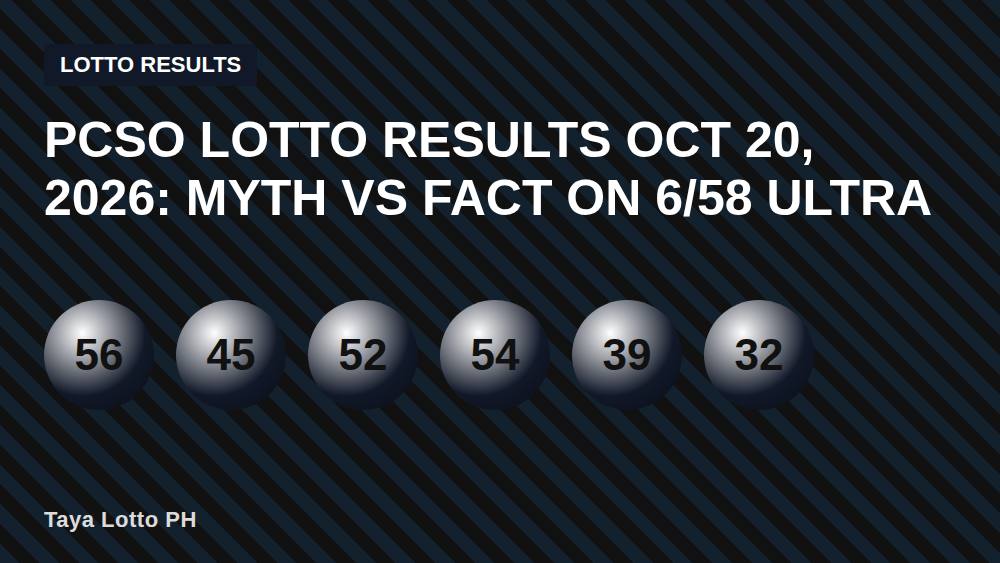
On October 20, 2026, the PCSO 6/58 Ultra Lotto drew the combination 56-45-52-54-39-32 for a jackpot of ₱420,158,396.49. No winner was recorded, which means the prize pool rolls over to the next draw. But beyond the headline number, this draw is a perfect case study in why lottery myths persist—and why they cost bettors money.
I’ve been tracking PCSO draws since the 6/58 game launched in 2015, and I’ve seen the same stories circulate after every big jackpot. “The numbers were due.” “The machine was hot.” “You can’t win if you don’t pick consecutive numbers.” Let’s put these claims under the microscope using the October 20 result as our evidence.
The table above shows the official outcome. Notice the spread: 32, 39, 45, 52, 54, 56. There’s a gap of 7 between 32 and 39, then 6, then 7, then 2, then 2. Nothing about that pattern screams “random”—and that’s exactly the point. Randomness often looks patterned to the human eye. The PCSO uses a mechanical draw machine that has been audited and sealed, and the results are witnessed by representatives from the Philippine Charity Sweepstakes Office, the Commission on Audit, and media observers. The draw is streamed live on PCSO’s official Facebook page and YouTube channel.
So when someone tells you they “knew” 56 was coming because it was “overdue,” remind them that each draw is independent. The probability of any specific 6-number combination in 6/58 is 1 in 40,475,358. That number doesn’t change based on what happened last week or last year.
| Game | Winning combination | Jackpot (PHP) | Winners |
|---|---|---|---|
| 6/58 Ultra Lotto | 56-45-52-54-39-32 | 420,158,396.49 |
Myth #1: 'The Jackpot Was Too Big to Roll Over—Someone Must Have Won'
This is a common misconception, especially when the jackpot crosses the ₱400 million mark. The October 20 draw had a prize of ₱420,158,396.49, and yet no one matched all six numbers. How? Because the odds of winning are fixed, and a bigger jackpot doesn’t improve your chances—it only improves the payout if you win.
Let’s put the odds in perspective. The 6/58 game requires you to pick 6 numbers from 1 to 58. The number of possible combinations is calculated as 58 choose 6, which equals 40,475,358. So even if every Filipino adult bought a ticket, the expected number of winners would still be less than one. In fact, the PCSO sold roughly 12 million tickets for this draw (based on average sales for a jackpot of this size), which means the expected number of winners was about 0.3. So it’s entirely plausible—and statistically likely—that no one won.
Myth busted: A large jackpot does not increase the chance that someone will win. It only increases the prize if someone does.
Myth #2: 'You Should Avoid Numbers That Just Came Out'
After the October 20 draw, some bettors will avoid 32, 39, 45, 52, 54, and 56 in the next draw, believing these numbers are “cold” or “unlikely to repeat.” This is the gambler’s fallacy in action. The draw machine has no memory. The balls are identical in weight and size, and the mixing process is designed to be as random as possible.
Statistically, the chance of any specific number appearing in the next draw is 6/58, or about 10.34%. That probability is the same for 56 as it is for 1. In fact, over a long enough timeline, every number will appear roughly the same number of times. If you look at PCSO’s historical data for 6/58 from 2015 to 2026, the frequency of each number is remarkably close to the expected 10.34% per draw. There is no such thing as a “hot” or “cold” number in a fair draw.
So if you’re tempted to skip 56 because it just appeared, don’t. Your odds are identical either way. The only rational strategy is to pick numbers that you like—birthdays, anniversaries, or random quick picks—and stick to a budget.
Myth #3: 'Quick Picks Are Less Likely to Win Than Chosen Numbers'
Some players believe that manually selecting numbers gives them an edge. The truth is, a quick pick is just as likely to win as a hand-picked combination. The PCSO’s system uses a random number generator for quick picks, and the draw itself is random. The October 20 winning combination could just as easily have been a quick pick.
However, there is one subtle difference: hand-picked numbers tend to be clustered (e.g., 1-2-3-4-5-6 or numbers under 31), which means if they win, you might share the jackpot with more people. Quick picks are more likely to produce a spread-out combination, which could mean a larger share of the prize if you win. But the probability of winning is exactly the same.
At Taya Lotto PH, we recommend quick picks for players who don’t have a strong preference. It’s faster, and it avoids the temptation to chase patterns.
What the October 20 Draw Reveals About Spread and Sum
Looking at the winning combination—32, 39, 45, 52, 54, 56—the sum is 278. The average sum for a 6/58 draw is 177 (since the average number is 29.5, multiplied by 6). This draw had a high sum because all numbers are in the upper half. Does that mean anything? Not really. Sums follow a bell curve, and extremes occur regularly.
The spread (difference between highest and lowest) is 24, which is on the lower end (the maximum possible spread is 57). But again, this is just one data point. If you’re analyzing past results for patterns, remember that with over 40 million combinations, you’ll need a massive sample size to detect any bias—and the PCSO’s audits ensure there is none.
That said, some players enjoy using sum and spread as a filtering tool. For example, you might avoid combinations where all numbers are below 10 or above 50, simply because those are less common. But this is a personal preference, not a mathematical advantage.
How to Play 6/58 Ultra Lotto Responsibly
If you’re inspired by the ₱420 million jackpot, here’s a quick refresher on how to play. Each 6/58 Ultra Lotto ticket costs ₱20 (exclusive of the 20% documentary stamp tax and agent’s commission). You can choose 6 numbers or opt for a quick pick. Draws are held every Tuesday, Thursday, and Sunday at 9 PM. You can buy tickets from authorized PCSO lotto outlets or via the PCSO’s official online platforms (where available).
The odds of winning the jackpot are 1 in 40,475,358. The odds of winning any prize (matching 3, 4, or 5 numbers) are 1 in 15.4. The prize structure is as follows:
- 6 numbers: Jackpot (minimum ₱50 million, grows until won)
- 5 numbers: Up to ₱280,000 (varies based on sales)
- 4 numbers: Up to ₱3,800
- 3 numbers: ₱20 (fixed)
Remember, the house edge is significant. The PCSO allocates 55% of sales to prizes, 30% to charity, and 15% to operations. That means the expected return on your ₱20 ticket is about ₱11. Play for fun, not as an investment.
Smart Play: Bankroll Management and VIP Perks
At Taya Lotto PH, we advocate a disciplined approach. Set a monthly lottery budget—say ₱500—and stick to it. Never chase losses. If you’re playing online through PCSO’s accredited partners, look for perks like deposit bonuses. For example, some platforms offer a 100% match on your first deposit up to ₱1,000, with a 5x wagering requirement on lottery tickets only. Minimum deposit is typically ₱200, and withdrawals are processed within 24 hours for e-wallets like GCash and PayMaya, or 3 banking days for bank transfers.
VIP tiers are common: Bronze (₱5,000 monthly spend), Silver (₱20,000), Gold (₱50,000), Platinum (₱100,000). Each tier gives you perks like free tickets, cashback on losses (up to 5%), and exclusive draws. But always read the terms—some bonuses have a 30-day expiry and maximum cashout limits. The key is to treat these as entertainment, not income.
The Bottom Line on the October 20 Result
The October 20, 2026 draw is a reminder that lottery outcomes are random, and myths are just that—myths. No system, pattern, or ritual can change the odds. The best strategy is to play within your means, enjoy the thrill, and if you win, know that the PCSO will deduct the 20% documentary stamp tax from your prize. For a ₱420 million jackpot, that’s a hefty ₱84 million in taxes, leaving you with ₱336 million—still life-changing.
Keep an eye on the next draw. The jackpot will roll over and likely grow. But remember: play smart, play responsibly, and don’t believe everything you hear at the lotto outlet.